I GOT BLACKER
Blackness is a Performance!

Yo, Yo, Yo, Whaddup Monica!?
This past weekend, I did something I thought I would never do.
I listened to Jack Harlow’s neo soul album.
Played it more than once.
Even more surprisingly, I enjoyed it. I even added a song, “All Of My Friends,” to my favourites.
Like many others on the internet, I viewed this album with a high degree of skepticism when it was announced. A neo soul album from Jack Harlow? Don’t make me laugh.
This skepticism was shared by most on the internet, expressed through an avalanche of memes about his new appearance. “LL Cool Whip” and “Wu Tang Klan,” the memes were endless.
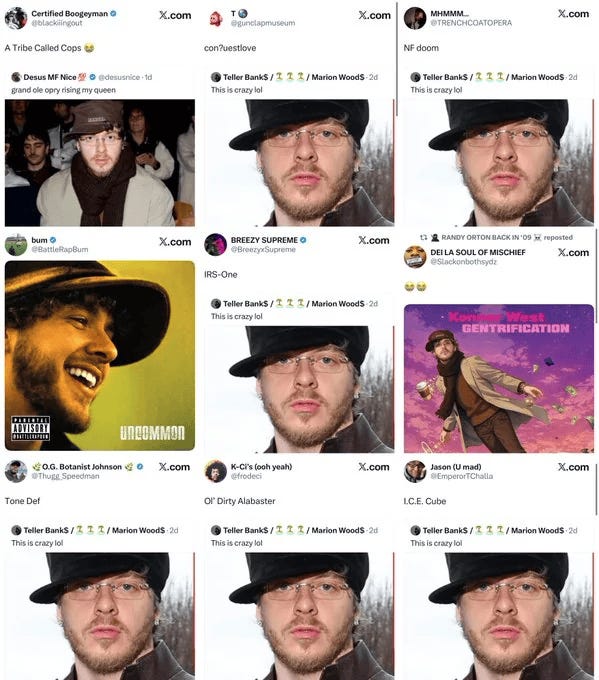
Monica is Harlow’s fourth studio album, a strong departure from his earlier rap career. Harlow never struck me as an artist who would deviate from his fun rap persona. And if he did, I assumed it would be, like many of his white contemporaries, a foray deeper into pop or country.
This assumption was shared by many. In the New York Times, PopCast cultural reporter Joe Coscarelli asks Jack about his genre shift:
“You didn’t retreat into a whiter genre, you arguably went deeper into-”
Jack interrupts him and says, “I got blacker”.
This soundbite went viral over social media, ragging on Harlow for this comment. Another insensitive white artist. (With people going so far as to theorize that Monica is a play on my nigga). It was not a good look for our white-soul brotha, Harlow.
However, in the interview, he expounded on his point.
“I love black music. I am aware of the politics today. That safer landing spot that a lot of white contemporaries have found. And of course it appealed to me to do something that I felt like I could do at a time when there are plenty of people expecting me to take some of the routes y’all take. Especially to take the route that might not be expected, but is also the one I genuinely want to take.”
He mentions his sonic influences for the album (Slum Village, Sade) and his visual references (Tupac, even James Baldwin, Mathieu Kassovitz’s La Haine). As a part of the album rollout, he has programmed a film series at The Roxy Cinema in New York, walked through the Criterion Closet, and paid for free books at the McNally Jackson bookstore.
As goofy as the initial announcement of a “Jack Harlow neo-soul album” sounded, there was a degree of intention behind the rollout that made me actually listen to it, and I enjoyed it.
However…
Even after hearing the full interview response and listening to the album, “I got blacker” still echoed in my head.
I was reminded of a memory from high school.
Blackness is [INSERT NEGATIVE STEREOTYPE HERE]
The fire alarm interrupted my honors history class.
We all filed out of the high school and stood in the parking lot waiting for the drill to finish.
I was the only Black kid in the class.
As we made small talk waiting for the drill to finish, someone commented, “You know, Joshua, you’re not really Black.”
This surprised me because I was Black at the time. (I double checked this morning, and I am still black. Whew! That was a close one!)
This off-handed comment turned into a surreal debate that lasted the length of the fire drill. Everyone was taking turns commenting on the ways I wasn’t really a Black person.
My rebuttals that I had African ancestry all the way back were ignored. The fact that I had four Black grandparents didn’t matter.
I was not Black because of my behavior. Whatever mental models of Blackness they held, I did not fit. Therefore, I was not “black”.
“I got Blacker”. The comment brought me back to my teen years. Various comments I had forgotten came to the forefront.
I remember distinctly two verbatim quotes. In a football huddle, one of my teammates was commenting on our star running back. “He has a mom, right?” The assumption being that broken homes were the norm. “Joshua, you have to admit, most black people are lazy. Come on, dude. You know I’m right.” (This one was more shocking because it came from the mouth of a mixed-race student. If you assumed his mom was white and his dad was black, you are correct.)
Blackness is pathology.
The expectation was that Black men had a natural skill in football and basketball.
Blackness is physical and athletic prowess.
“I like these shoes, but they’re too much like the shoes Black people wear,” a classmate of mine commented on the Nike Air Jordans his sister had bought for his birthday. Embarrassed, he quickly apologized when he noticed I overheard the comment.
Blackness is a consumer product.
I lost count of the number of times someone assumed I was from Prince George’s County, Maryland (a predominantly Black middle-class county in Maryland) because I was black.
Blackness is a geographic location.
I remember a girl distinctly complaining about being asked to the winter formal dance. “He asked me to go with him, but I’m not going to because he’s Black,” I remember someone shaming a girl for hooking up with one of my Black peers. “You know they’re dirty, right?” They both laughed about this.
Blackness is a sexual taboo.
At the risk of sounding like yet another “black kid in private school sob story”, I bring these memories up because I believe they are indicative of a larger societal trend. Mainly, that “Blackness”, “Being Black”, “Black” is not a simple descriptor of shared ancestry or cultural identity.
Rather, “Black” is seen as a particular set of behaviors and cultural products. If you do more of these Black things, you are more Black; if you do less of these things, you are less Black.
As I recount these memories, I recall how no one ever said these things directly to me, but they would slip up, seemingly forget I was within earshot of the conversation, then meekly recount the statement when I called them out on it.
A real invisible man. People get comfortable around you and say how they really feel. Maybe they forgot I was Black? A “real” Black person would have made them uncomfortable. Uncomfortable enough to hold their tongue.
Blackness is uncomfortable.
Blackness is a product to be bought. A set of behaviors and impulses to be acted upon. Blackness is a sport to master. Blackness is a family that is broken.
Ultimately, Blackness is a performance.
Even if Harlow’s appreciation and study of neo soul is genuine (and I do think he’s genuine), he still falls into the mold of “Blackness as performance”. As Harlow describes his new look:
“It all started with the music, and whatever the music sounded like, I just wanted to decorate around it appropriately. Even the cover art, which is not much of a conceptual statement, has an atmospheric passive quality that I just want to work in tandem with the music. And I’d say the same thing about the clothes. Of course, there’s certain things that point to a time and era. But you know the Kangol is a symbol of something for sure…. I’ll put it this way, it’s not a cowboy hat.”
Harlow acknowledges that, by donning a Kangol the iconic hat made famous by rappers like LL Cool J and Run DMC, he places himself in conversation with past Black hip hop artists.
The Kangol makes him blacker.
I’m Just Trying To Be Myself (I Got Everyone Mad At Me For It)
Dear reader, I have to pause for a moment.
There’s some crucial context about me that you don’t know, but that will help shape the rest of the conversation.
You may think I have a strong “anti-white rapper,” but this is not true.
I’m not a Jack Harlow hater, really. I enjoyed his early work and had been following him for a minute. Dark Knight is still in my rotation, and I found him through another rap group, The Homies.
I’m not against white comedy rappers. I think Lil Dicky is both funny AND a great technical rapper (Listen to Russel Westbrook On A Farm, then come back and debate me on this.)
Weird Al Yankovic is one of my favorite artists. His rap parodies are consistently in my Apple Music Replays each year. I know the lyrics to White and Nerdy by heart.
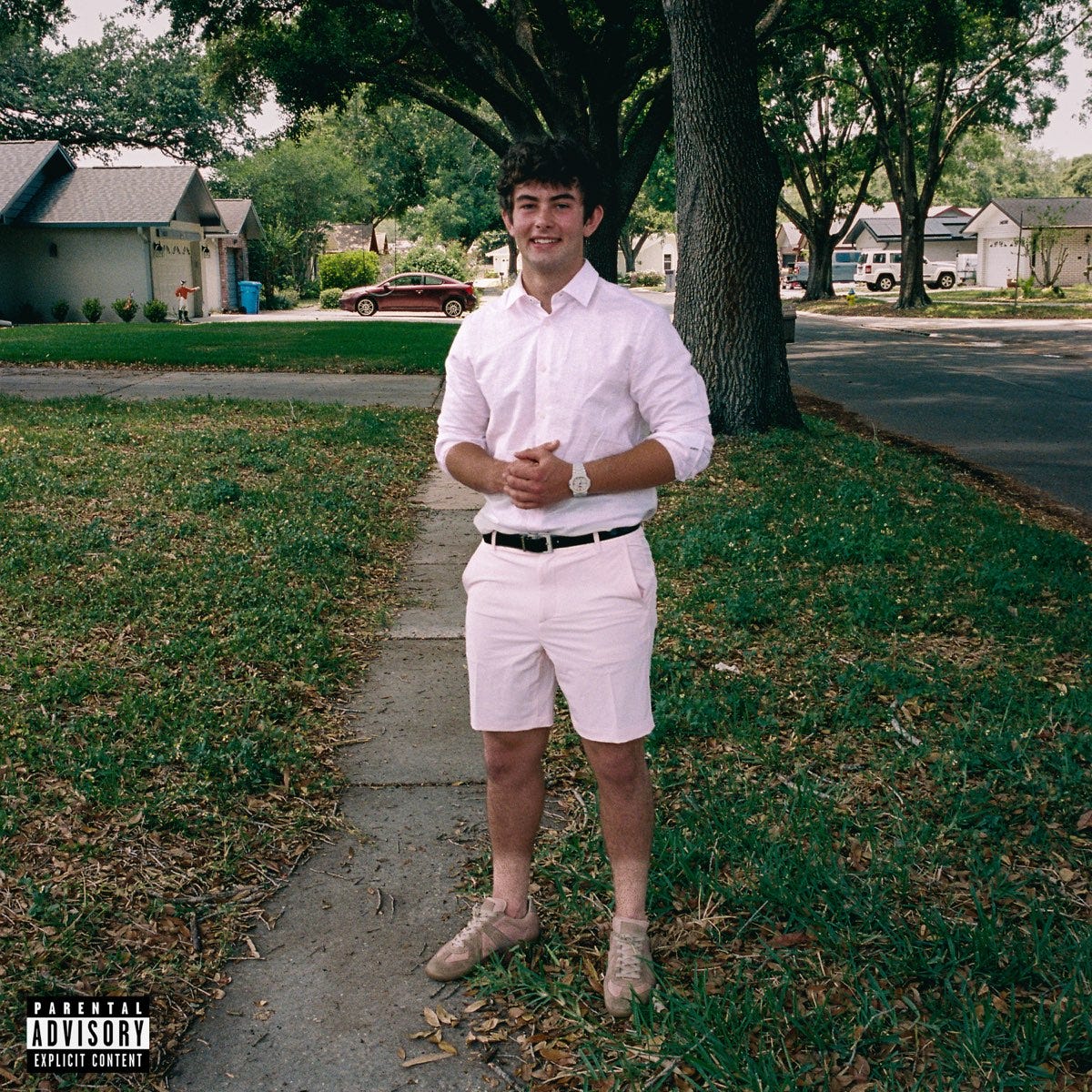
Knowing this context, one of my friends suggested that I listen to the latest white comedy rapper, Ian, and his debut album, Valedictorian.
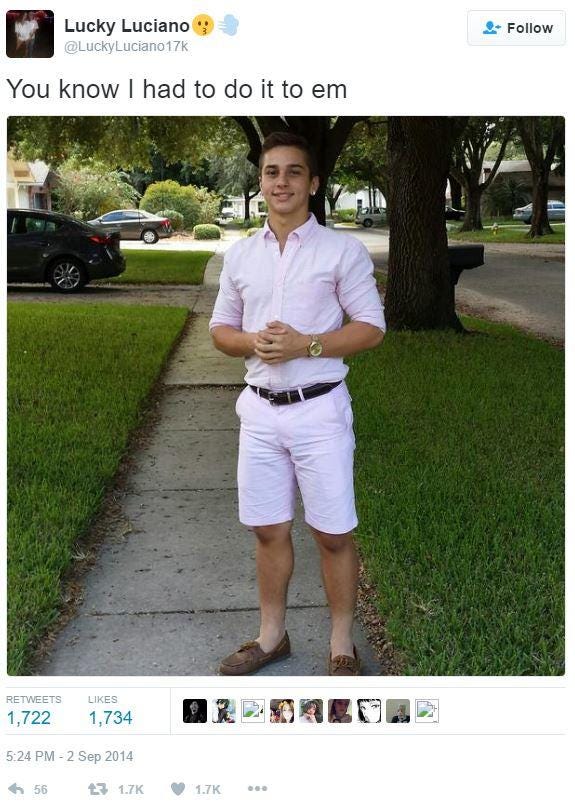
When I listened to Valedictorian, I was ultimately unmoved. I skimmed through the project. The beats were fine, nothing I had not heard before. The lyrics weren’t that clever or funny. The album cover, a reference to a popular internet meme, made me chuckle. I listened to Magic Johnson a few times. But the whole thing felt rather mediocre.
Magic Johnson is your standard rap fare, flexing braggadocious. One of the songs, one line stuck out:
“I’m just trying to be myself, I got everyone mad at me for it,” Ian complains.
I found this wholly ridiculous at the time because it was clear that Ian was playing a character. In re-listening to Valedictorian, again for this essay, I still find that bar so audacious, it’s insulting.
In the Pitchfork review for the album, Alphonse Pierre writes,
“…the problem with Valedictorian: It’s making a joke out of the music and culture it’s trying to swagger-jack. Everything is so tongue in cheek: Look, isn’t it so funny that a college-age white kid who you could imagine playing lacrosse at a New England private school has a mixtape hosted by DJ Holiday, famous for talking his shit on some of the greatest Gucci Mane and Chief Keef projects?... none of Valedictorian is unlistenable—just devoid of any personality or imagination. Performing an amalgamation of melodic regional rap of the last decade or so, Ian lacks the ability or intention to do anything other than replicate music that already exists.”
(https://pitchfork.com/reviews/albums/ian-valedictorian/)
Ian is performing Blackness.
As we have established, Black is not an identity or shared ancestry. Black is a series of pathologies, products, sounds, and regional dialects that can be imitated.
But what I find more insulting about Ian’s “character” is the insistence that it’s his authentic self, that the haters just hate him for being too real.
On Matan Even’s Podcast, the inflammatory Matan presses Ian about his voice.
Matan: Why the hell do you talk like that? Do you think it will make you black?
Ian: No.
Matan: So why do you do it then? Did you accidentally eat one of those balloons?
Ian: This is just my voice.
(Link to interview: Matan Attacks Ian’s Manager For Trying To Scam Him)
When Ian dropped his XXL Freestyle on July 3, 2025, many people on the internet clowned him. The “hmmm” chorus and the snaps are a classic freestyle setup. But something about the freestyle just felt off. Something about the rhymes didn’t feel right.
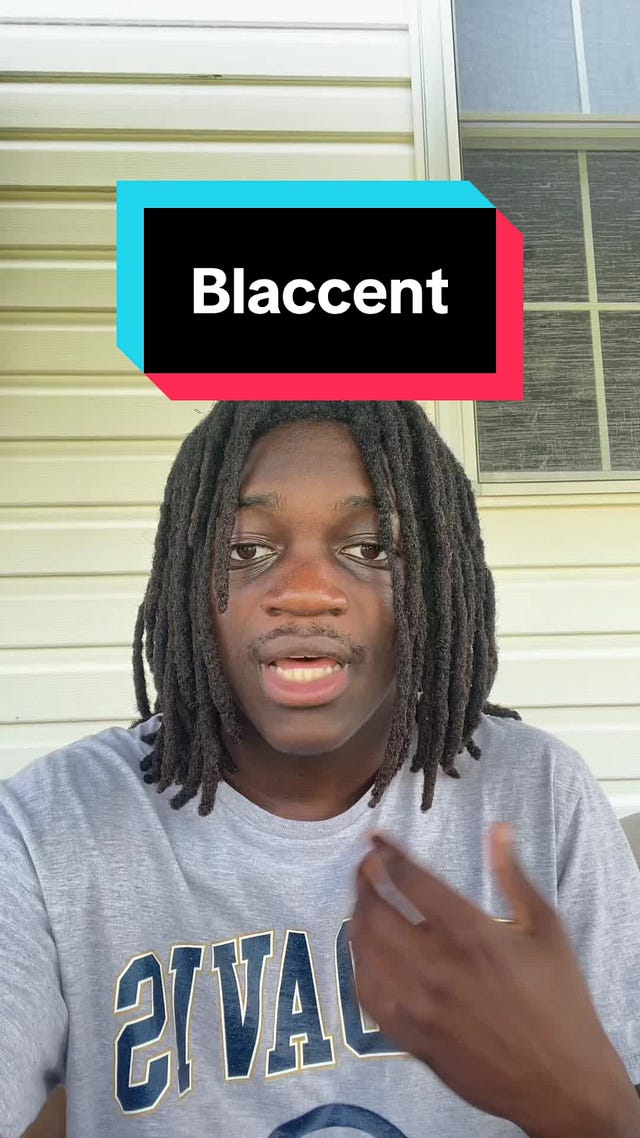
Zay Dupree, a TikToker known for his analysis of linguistics and regional dialects, pointed out that Ian is poorly imitating the Pin-Pen Merger. The Pin-Pen Merger is a vowel merger. A vowel merger is when a specific accent changes distinct vowel sounds to sound the same.
Ian is imitating the “Pen-Pin Merger”, where the vowel sound in Pen sounds like the vowel sound in Pin. This is a distinctive linguistic trait of Black Atlanta. Linguistic trait held only by Black ATLiens.
Zay’s full breakdown of Ian’s blaccent:
 Tiktok failed to load.
Enable 3rd party cookies or use another browser
Unlike Weird Al (song parodies), Lil Dicky (self-deprecating comedy with surprising technical prowess), or even an act like Lil Mabu (over-the-top parody character), Ian approaches his gimmick with a weird level of authenticity.
“Look at me. I’m a white boy rapping like I’m from Atlanta. This is my true, authentic self. I am not doing a bit. This rap shit is easy, Mane. Zone six!”
He approaches rap as an amalgamation of references, reheating the nachos of far more talented artists that came before him, but in the same vein, denies that this is his main gimmick.
Blackness is performance.
And this performance has served him well: a spot on the XXL Freshman list, a European tour (titled the Gap Year Tour. Get it? Because rich white kids take gap years in Europe), Rolling Loud, Lollapalooza.
No signs of stopping yet.
Minstrelsy Always Sells
For a good portion of America’s history, chattel slavery was the dominant economic mode. This economic base shaped the societal superstructure. All aspects of American society were shaped by the fact that the society was run on slavery. This economic base shaped popular entertainment. One of the earliest and most popular American entertainment forms was the minstrel show.
What is a minstrel show? What is Blackface minstrelsy?
“The Minstrel show, an American theatrical form, popular from the early 19th to the early 20th century, was founded on the comic enactment of racial stereotypes. The tradition reached its zenith between 1850 and 1870. Although the form gradually disappeared from the professional theatres and became purely a vehicle for amateurs, its influence endured—in vaudeville, radio, and television as well as in the motion-picture and world-music industries of the 20th and 21st centuries.” (https://www.britannica.com/art/minstrel-show)
“Blackface minstrelsy, American theatrical form that constituted a subgenre of the minstrel show. Intended as comic entertainment, blackface minstrelsy was performed by a group of white minstrels (travelling musicians) with black-painted faces, whose material caricatured the singing and dancing of enslaved people. The form reached its peak of popularity between 1850 and 1870, when it attracted large audiences in both the United States and Britain. Although blackface minstrelsy gradually disappeared from the professional theaters and became purely a vehicle for amateurs, its influence endured in later entertainment genres and media, including vaudeville theater, radio and television programs, and the world-music and motion-picture industries of the 20th and 21st centuries.” (https://www.britannica.com/art/blackface-minstrelsy)
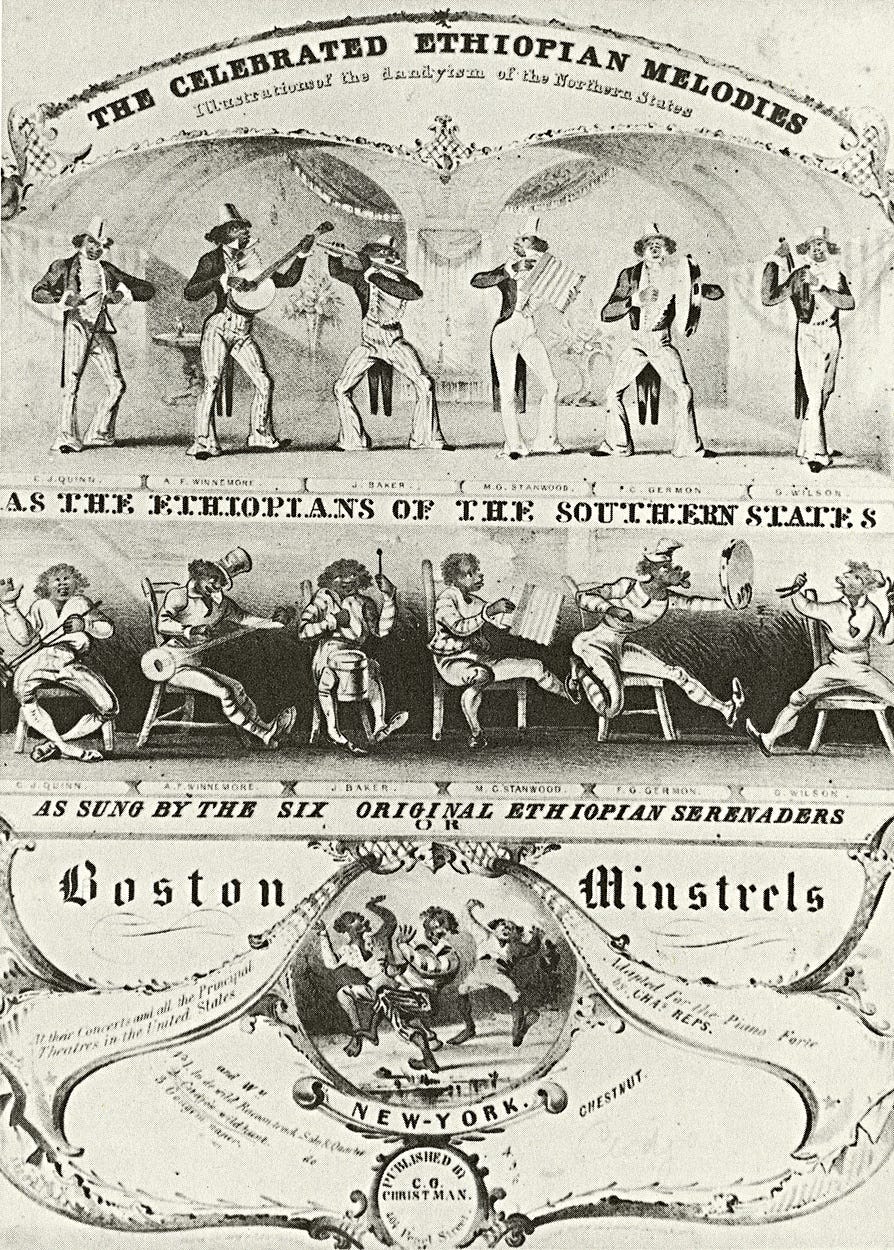
Blackface minstrelsy was and is the foundation for the American entertainment industry. As I wrote in my article The Construction of Black Spaces and Black Faces in the Golden Age of Animation the American animation industry borrowed heavily from the signs, symbols, and structure of the minstrel show.
The American film industry was no different.
Al Jolson, born Asa Yoelson, was an American singer, comedian, actor, and vaudevillian. Jolson was one of the most famous and highest-paid stars in America during the 1910s and 1920s. Jolson rose to fame in America first through his Blackface vaudeville performances. His singing was renowned throughout the country, and he popularized many Black songs to American audiences. Of course, he did that with his face painted Black, imitating the speech and song of African Americans for the stage.
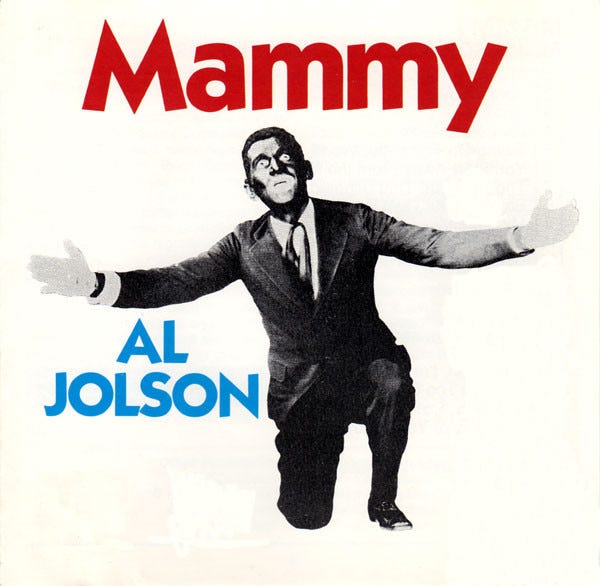
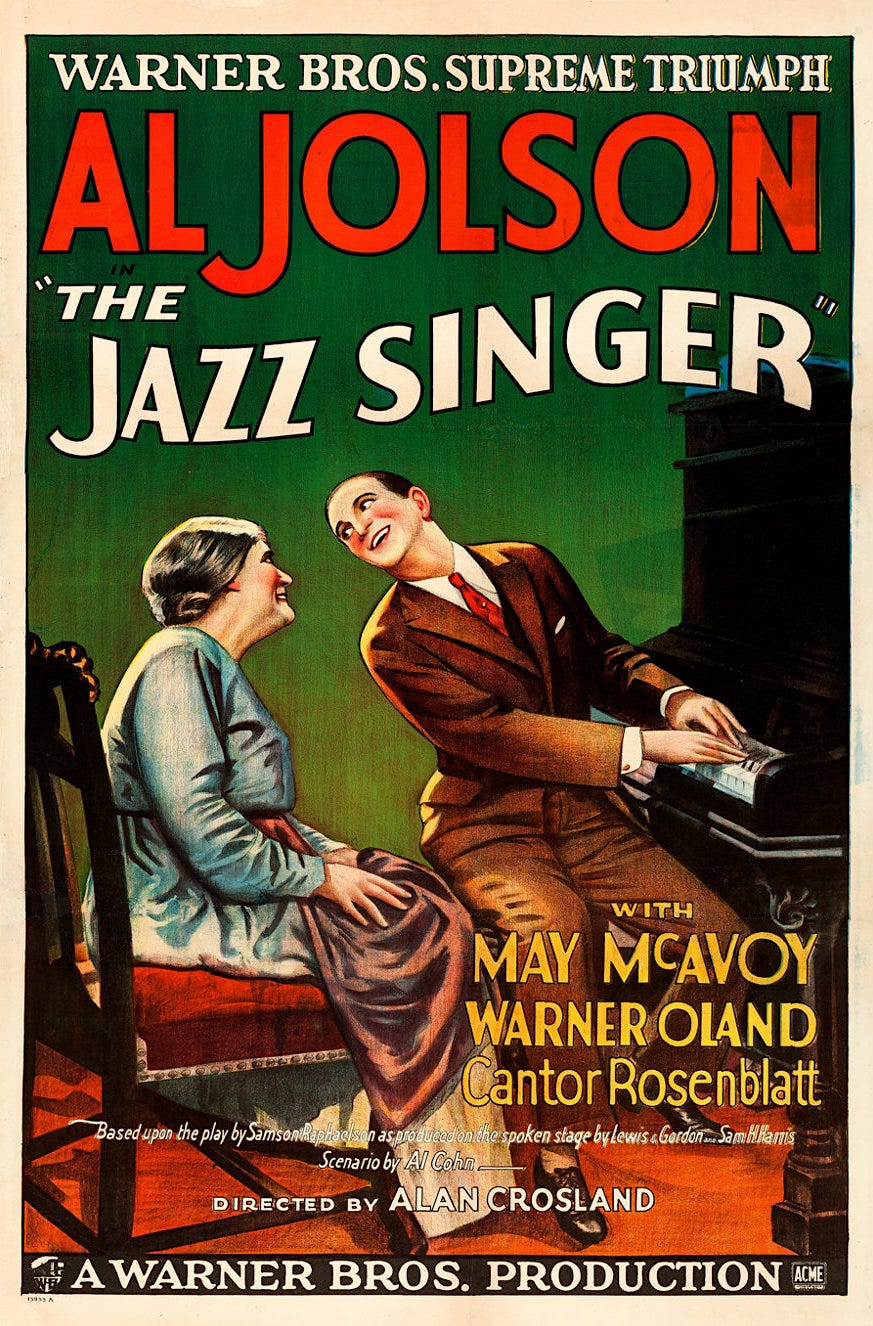
Jolson starred in the first motion picture with sound, The Jazz Singer (1927). Released by Warner Bros. Pictures, the film depicts the life and trials of Jakie Rabinowitz, who attempts to become a professional blackface entertainer as his career conflicts with his heritage and family
.
Jolson’s own career as a Blackface performer landed him a spot in the film. Jolson represents a crucial point in American entertainment history, a transitory period from vaudeville to film. One thing stays consistent across the transition: stereotypes of Black people are popular.
The historical significance of Blackface and minstrelsy in the American film industry cannot be overstated. Blackface keeps showing up at crucial moments in American film history. The first “talkie” movie? The Jazz Singer. Blackface. The first Blockbuster film? Birth of A Nation. One of the highest-grossing films of all time? Gone With The Wind.
Blackface brings in the big bucks. Historically, this is true, and even today, minstrelsy still pulls a pretty penny. People just can’t seem to get enough of performing Blackness. Joson’s career boomed when he put on the burnt cork, and it’s in large part why we still talk about him today.
Who do you think has a better blaccent: Al Jolson or Ian?
Y.W.A (Young White Avatar)
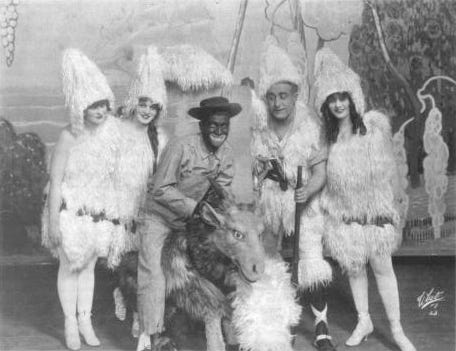
On April 11, 1936, Warner Bros. Pictures released The Singing Kid. The movie stars Al Jolson as Al Jackson. Jackson, a talented Broadway performer, lives in a penthouse apartment. His career falls into jeopardy after the unexpected loss of his singing voice. He is sent to the countryside to recover, where he meets Ruth Haines, a farm girl caring for her aunt. Romance ensues.
The Singing Kid is remembered in part for its musical number between Al Jolson and Cab Calloway, an African-American Jazz singer and band leader. In the scene, Jackson and Calloway (as himself) sing to each other from the ledges of their respective high-rise apartments. The two sing I Love To Sing-a backed by Calloway’s band.
On July 25, 2024, Hate Me by Ian feat. Lil Yachty was released. The single was released with an accompanying Lyrical Lemonade musical video directed by Cole Bennet. The song features Ian and Yachty rapping. Ian’s writing is slightly better here, with punchline bars and cadence. (He outraps Yachty, in my opinion.) Bolstered by the unique ChildBoy-produced beat, the music video sits at a comfortable 18 million views as of the writing of this piece.
Hate Me, and I Love To Sing-a are separated by almost 90 years and are two genres that could not be further from one another. But I do find the scenarios similar. A talented black artist performs a duet with a white man known for imitating Black people. The white artist outperforms the Black guy.
In ATLANTA, Season 4, Episode 3, “Born 2 Die,” Alfred, aka Paper Boi, gets a gig teaching a young white fan of his how to rap. After the studio session, he meets a group of older black rappers called the YWA. The group’s leader, Bunk, explains that YWA stands for Young White Avatar. The main purpose of a YWA is to advance their own careers. The plan is simple: find a young white talent, manage and collaborate with the talent. Extend your own success
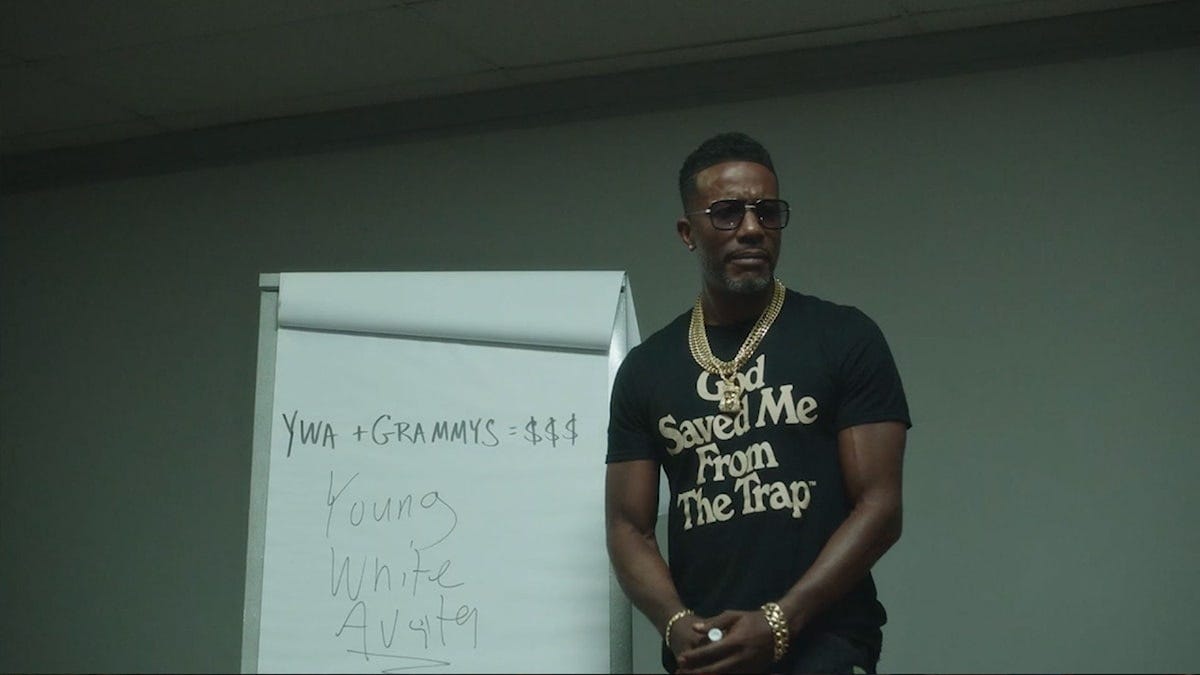
Is Ian Yachty’s YWA? Was Al Jolson Cab Calloway’s YWA?
While the YWA concept does not map perfectly onto either of these collaborations (Yachty and Ian are close in age, Jolson and Calloway were both stars in their own right), the YWA concept speaks to a larger idea, mainly that there is a ceiling to the level of success a Black artist can reach. There will need to be, at some point in the career, a “crossover” into mainstream (white) audiences. The industry will keep them segregated until they concede a degree of their artistic integrity or find mainstream (white) collaborators to introduce them to a new audience.
This segregation of the music industry used to be worse. Even Michael Jackson had a hard time getting ‘Beat It’ on MTV because the network didn’t play Black artists. Although there is no explicit color line today, Black artists find themselves struggling to build audiences, Black filmmakers struggle to get funding for films, etc.
Particular expressions of Blackness get boosted to the mainstream. This is, again, rooted in the minstrel era.
Blackening Up A Black Face
The Ethiopian Serenaders was a Blackface Minstrel troupe. From Boston, they travelled across America, even performing for John Tyler at the White House in 1844. A group of about 17 men, I want to highlight one William Henry Lane, aka Juba. As a teenager, Juba challenged and danced against the best dancers of his era. Juba traveled to London with the Ethiopian Serenaders in 1848, the only Black person in the minstrel troupe. As a member of the troupe, Lane, a Black man, would have to wear the blackface makeup worn by the other troupe members. A review of his performance from the 1848 season:
“The dances he introduced were distinguished for eccentricity, rapidity of motion, and the accuracy of the time kept. They approximated, in some respects, to those wild dances that may be witnessed sometimes in the remoter parts of the Highlands, including the sword dance, as there known; besides having the same idea of clanking the heels, as pervades the Polka. But it is not the office of the legs alone to do all this; the head, arms, and body generally take full share of duty, and assume such extraordinary positions that only a being possessed of the power of Proteus could calculate upon taking.” ( The Manchester Courier and Lancashire General Advertiser, October 18, 1848. Quoted in Johnson, “Witness”.)
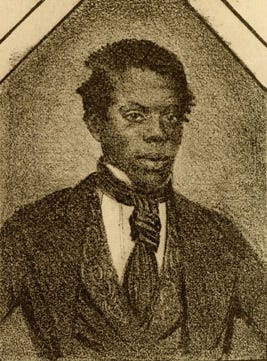
Juba would die sometime in his late 20s. The cause of death is unknown, but ethnomusicologist Mairan Hannah Winter suggests that his performance schedule, day and night for 11 years, contributed to his early death. However, the impact of his dance style is still felt today.
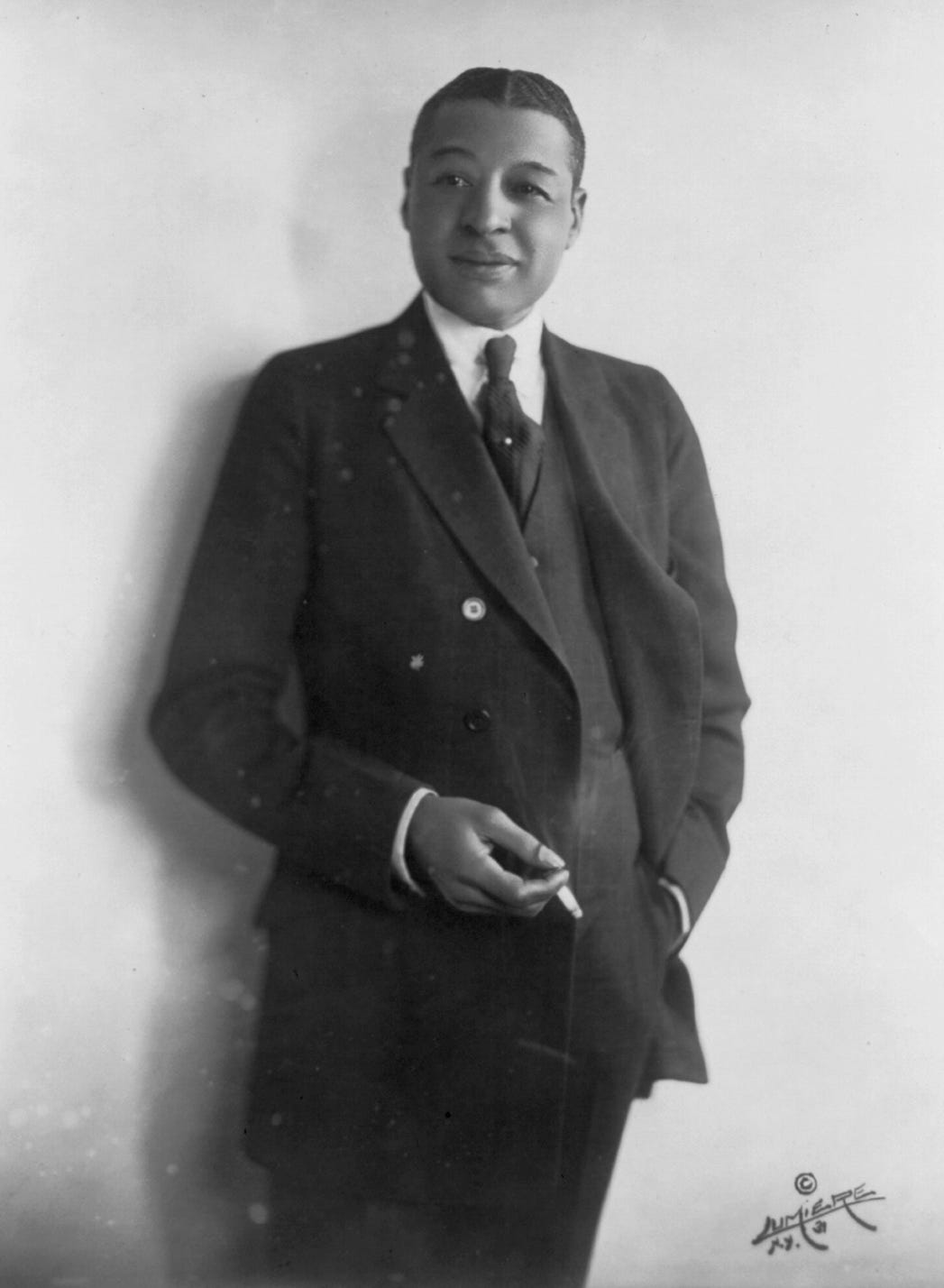
Bert Williams, a Bahamian-born entertainer and one of the most famous comedians of the vaudeville era, was another famous Blackface performer. One of the most popular entertainers of his day, Bert Williams, a tall,, refined man, dropped his shoulders, blackened his face, and spoke in a minstrel imitation of black speech (a blaccent, if you will). Despite his success as a performer, Williams suffered from the indignities of institutional racism and experienced long bouts of depression from the alienation. His fellow vaudevillain W.C. Williams described him as the funniest man I ever saw—and the saddest man I ever knew” (Wintz, Cary D., Encyclopedia of the Harlem Renaissance, Routledge (2004), p. 1210, ISBN 1-57958-389-X.)
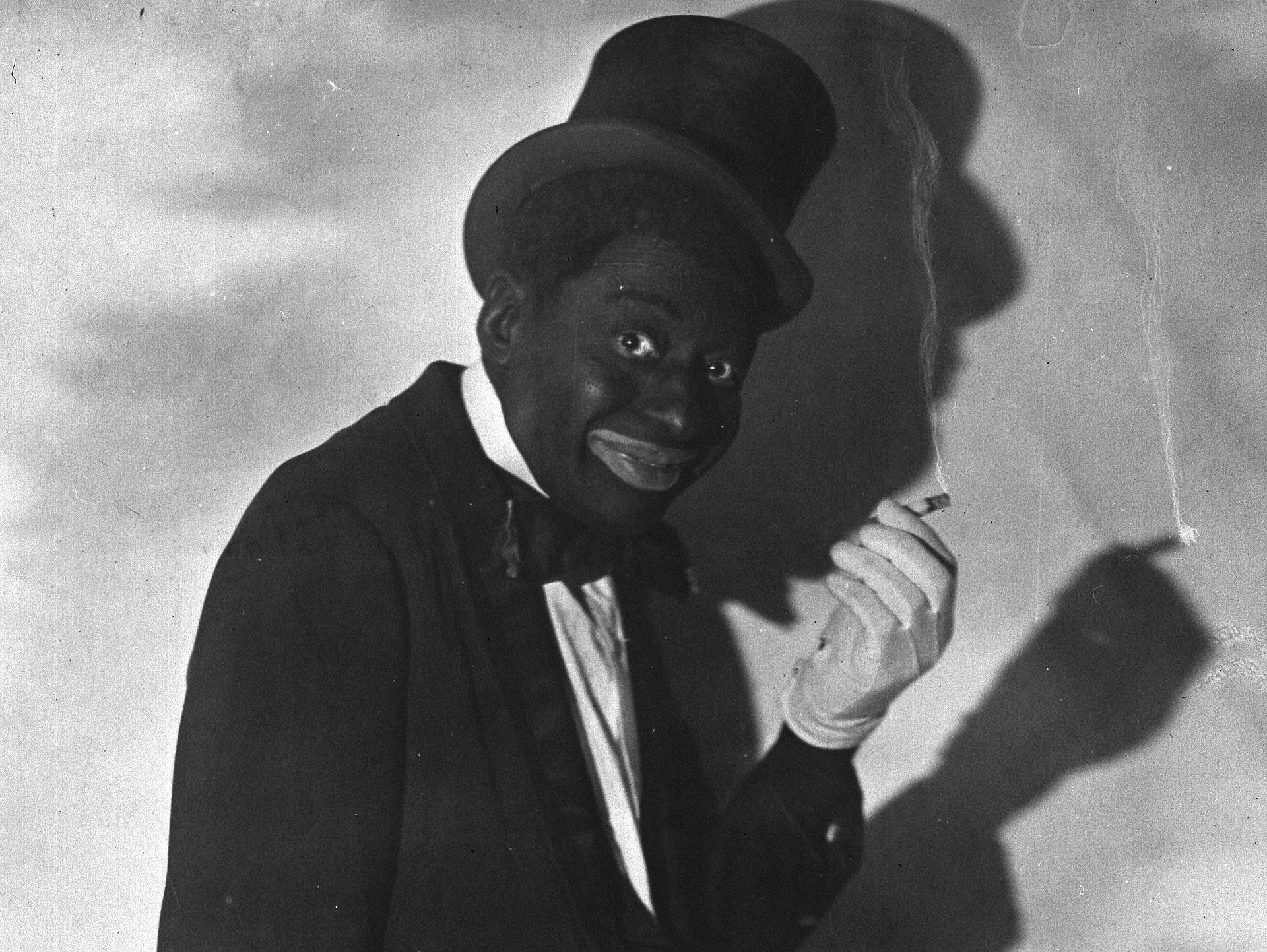
Lincoln Theodore Monroe Andrew Perry, better known by his stage name Stepin Fetchit, is largely considered the first successful Black actor. The first Black actor to receive screen credit in a feature film and the first Black actor to earn $1 million. Donald Bogle, in his Book Toms, Coons, Mulattoes, Mammies and Bucks, writes, “So successful was he with his slow gait that for years audiences thought Stepin Fetchit actually could not run. (Bogle, pages 32 - 33).
Perry’s character, the slow, shuffling, mumbling Stepin Fetchit, was the Laziest Man in the World. Outside of his character, he was highly literate and wrote for The Chicago Defender. A huge success during his acting career, Perry would die broke after mismanaging his own fortune. In the latter half of his life, he became a pariah, as Black audiences could not connect with his stereotypical character. (https://historycollection.com/this-is-the-actor-that-divided-black-america-and-heres-why)
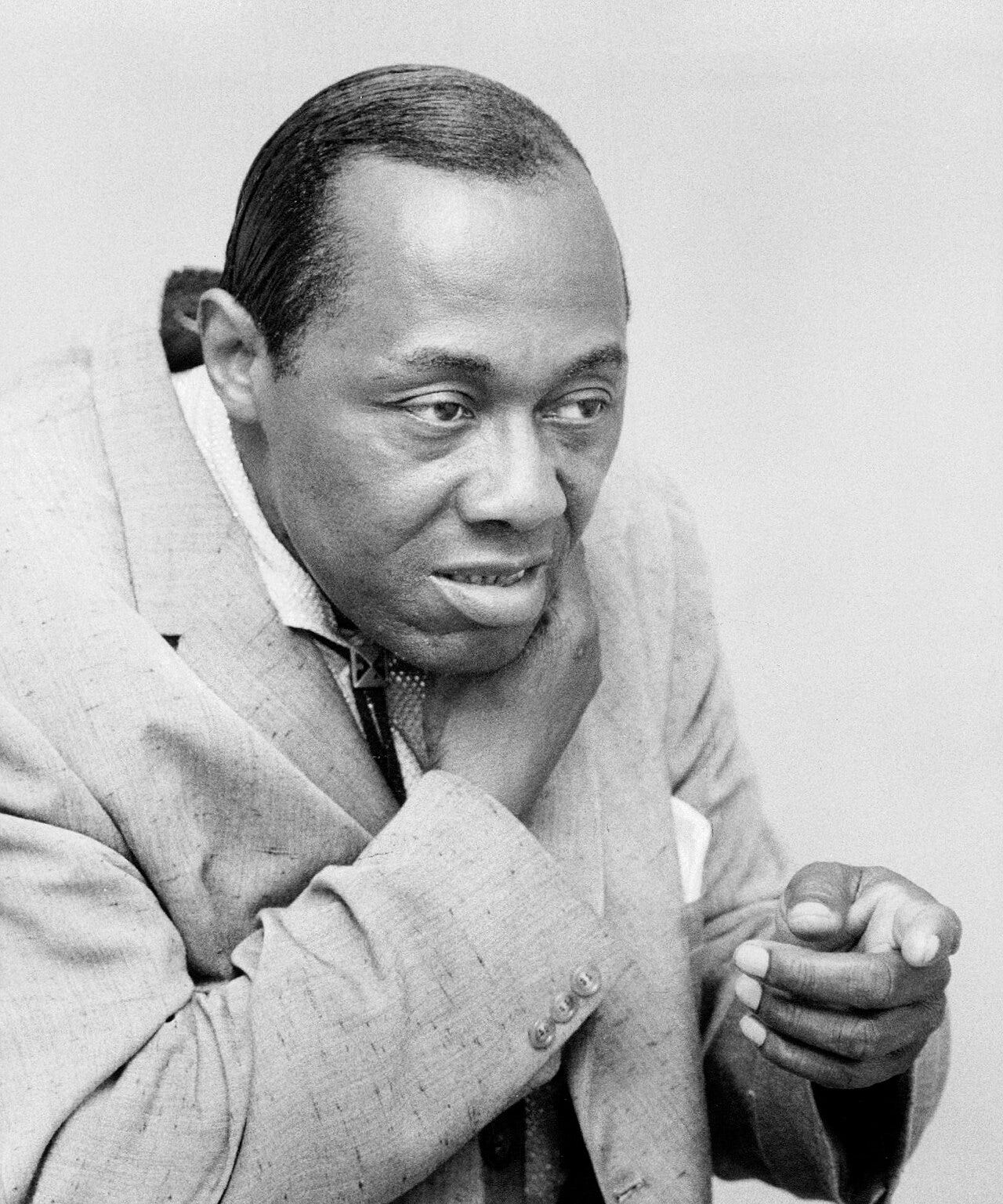
And the list goes on. James B. Lowe, Farina, Noble Johnson, Hattie McDaniel, Bill “Bojangles” Robinson, Willie Best, Clarence Muse, etcetera, etcetera, etcetera!
Countless Black performers for the stage and screen were reduced to mere caricatures of Black people because that was the only job they could book. Talented performers are stuck in an industry that is more interested in the performance of Blackness than in a depiction of real Black life.
Am I saying Lil Yachty is “blackening up” the same way Bert Williams was forced to?
No.
But he is in a larger industry that rewards this type of behavior.
The roots of American entertainment are intertwined with the racist representations of Black people.
These stereotypes as Donald Bogle wrote, were “used to the same effect: to entertain by stressing Negro inferiority” (Bogle 1). And in the documentary Ethnic Notions, Marlon Riggs lays out how each of the major Black stereotypes served as sociopolitical function. During slavery it was useful to depict the enslave as happy content and docile under the watchful eyes of their masters, a justification for the brutality of chattel slavery. Once they were free it was more politically expedient to depict them as violent brutes that must be suppressed.
You Probably Should Just Listen To D’Angelo
American society was shaped by its slave owning economic base. Now we don’t live under a slaveocracy. We live under capitalism. And under capitalism, we see “Black culture” absorbed and rendered a commodity. This is nothing new; rather, a continuation of a system in which we were actual commodities, bought and sold alongside grain and cattle.
Minstrelsy never died; it was absorbed into the modern era. People don’t use Blackface makeup anymore (at the very least, it is seen as taboo), but the minstrel archetype, performing blackness, the stereotypes of the tom, coon, mammy, mulatto, buck, and pickanniny, is as popular as ever.
Big Groove, aka Clive Ibizugbe, is an influencer with 2.57 million YouTube subscribers, 6.5 million TikTok followers, and 2.2 million Instagram followers. Ibizugbe’s “comedy” routine consists of him trying various restaurants, taking an enormous bite of food, then getting up and dancing happily as he reacts to the food. This is notable because of his large muscular size. Ibizugbe, for several years, went by the name Grooving Gorilla before internet pressure from Black folks told him to stop calling himself a damn gorilla.
What is the difference between the Grooving Gorilla and Stepin Fetchit?
After a lynching, it was common practice to take a picture of the body and send it as a postcard. The death of a Black man, the charred corpse, was a community bonding ritual. Lynchings would attract hundreds, if not thousands, of attendees.
What is the difference between a postcard of a lynching and a meme of George Floyd’s murder?
The technology changes, but the spirit stays the same.
Despite all this struggle, even from the days of vaudeville, Black people have worked to create their own image. To carve out spaces in a society and an industry that is invested on reinforcing stereotypes.
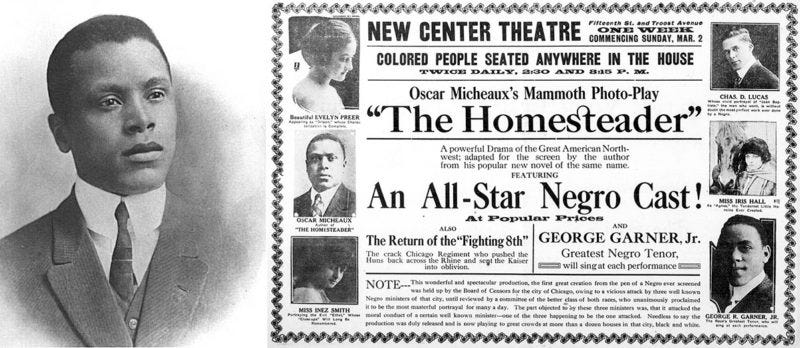
Oscar Michaeux was an African-American film director and independent producer. Micheaux started as a novelist, promoting his writings and selling his books. As he promoted his writing, he also gained an interest in movies. His first movie, The Homesteader (1919), was an adaptation of his own novel. The Homesteader was the first feature film produced by an African American. Micheaux went on to produce and direct over 44 films independently.
By his own words:
My results were narrow at times due to certain limited situations I endeavored to portray, but in those limited situations, the truth was the predominant characteristic. It is only by presenting those portions of the race portrayed in my pictures, in the light and background of their true state, that we can raise our people to greater heights. I am too imbued with the spirit of Booker T. Washington to engraft false virtues upon ourselves, to make ourselves that which we are not.”
So am I saying don’t listen to Ian? No.
Don’t listen to Monica? No.
Though you probably should just listen to Future or D’Angelo. To support Black artists who have laid the groundwork and set the mold for so many who came after them.
And if Jack Harlow, if you’re reading this. Thank you for making a neo soul album. From one artist to another, I do appreciate seeing someone push their boundaries creatively, to explore new sounds and themes, and honor those who came before them.
Heck, the album inspired me to write again. So I thank you, my brother. Next time you see me, Henny shots on me.
You’re good in my book, Monica!
Works Cited
Atlanta: “YWA: Young White Avatar.” Directed by Donald Glover, FX, 2022. YouTube, uploaded by FX Networks, www.youtube.com/watch?v=bDx8h0M1W4g.
Bogle, Donald. Toms, Coons, Mulattoes, Mammies, and Bucks: An Interpretive History of Blacks in American Films. Updated and expanded 5th ed., Bloomsbury Academic, 2016.
Dupree, Zay. “ian needs to hire an accent coach.” TikTok, 6 July 2025, www.tiktok.com/@zaydupree/video/7523920538444533023.
The Ethiopian Serenaders Are Formed. African American Registry, 4 Dec. 1840, aaregistry.org/story/the-ethiopian-serenaders-begin/.
“Ethnic Notions.” Directed by Marlon Riggs, California Newsreel, 1986.
Harlow, Jack. “Dark Knight.” YouTube, uploaded by Jack Harlow, 28 Oct. 2017, www.youtube.com/watch?v=pgKKY8bg3N8.
---. “Why Jack Harlow Swerved From Huge Rap Hits to ‘Egoless’ R&B on ‘Monica.’” Interview by Jon Caramanica and Joe Coscarelli. The New York Times, 13 Mar. 2025, www.youtube.com/watch?v=OR-GIvtidd8.
“ian: Valedictorian.” Pitchfork, pitchfork.com/reviews/albums/ian-valedictorian/. Accessed 3 May 2026.
Even, Matan. “Matan Attacks Ian’s Manager For Trying To Scam Him.” YouTube, uploaded by Matan Even, 28 Sept. 2025, www.youtube.com/watch?v=a2cmvrlw3-o.
“Ian’s 2025 XXL Freshman Freestyle.” YouTube, uploaded by XXL, 4 July 2025, www.youtube.com/watch?v=vshBgfqkxBI.
Johnson. “Witness.” The Manchester Courier and Lancashire General Advertiser, 18 Oct. 1848.
Jolson, Al, and Cab Calloway. “I Love to Sing-a.” The Singing Kid, Warner Bros., 1936. YouTube, uploaded by Classic Movie Musicals, www.youtube.com/watch?v=LfiftuUUV8Y.
Lee, Spike, director. Bamboozled. New Line Cinema, 2000.
Lupack, Barbara Tepa. Literary Adaptations in Black American Cinema. University of Rochester Press, 2002.
Lyrical Lemonade. “Lil Yachty & Ian - Hate Me (Official Music Video).” YouTube, 2025, www.youtube.com/watch?v=FjFPy3N2tV4.
“Minstrel Show.” Encyclopedia Britannica, www.britannica.com/art/minstrel-show. Accessed 3 May 2026.
“Blackface Minstrelsy.” Encyclopedia Britannica, www.britannica.com/art/blackface-minstrelsy. Accessed 3 May 2026.
Reed, Joshua. “The Construction of Black Spaces and Black Faces in the Golden Age of Animation.” Substack, 11 Nov. 2025, substack.com/home/post/p-178540451.
The Homies. “Leaf Wraps.” Featuring Jack Harlow. YouTube, uploaded by The Homies, 8 Feb. 2019, www.youtube.com/watch?v=CsLR0kBny4w.
“This Is the Actor That Divided Black America and Here’s Why.” History Collection, historycollection.com/this-is-the-actor-that-divided-black-america-and-heres-why. Accessed 3 May 2026.
Winter, Marian Hannah. “Juba and American Minstrelsy.” Inside the Minstrel Mask: Readings in Nineteenth-Century Blackface Minstrelsy, edited by Annemarie Bean et al., Wesleyan UP, 1996, pp. 223-40. Originally published 1947.
Wintz, Cary D. Encyclopedia of the Harlem Renaissance. Routledge, 2004.
“you good in my book, monica!” 😭
thoroughly enjoyed this read.